Approximately Up Moon Landing Guide
Earth transfer, lunar atmosphere, thruster choice, and a controlled Moonstep touchdown.
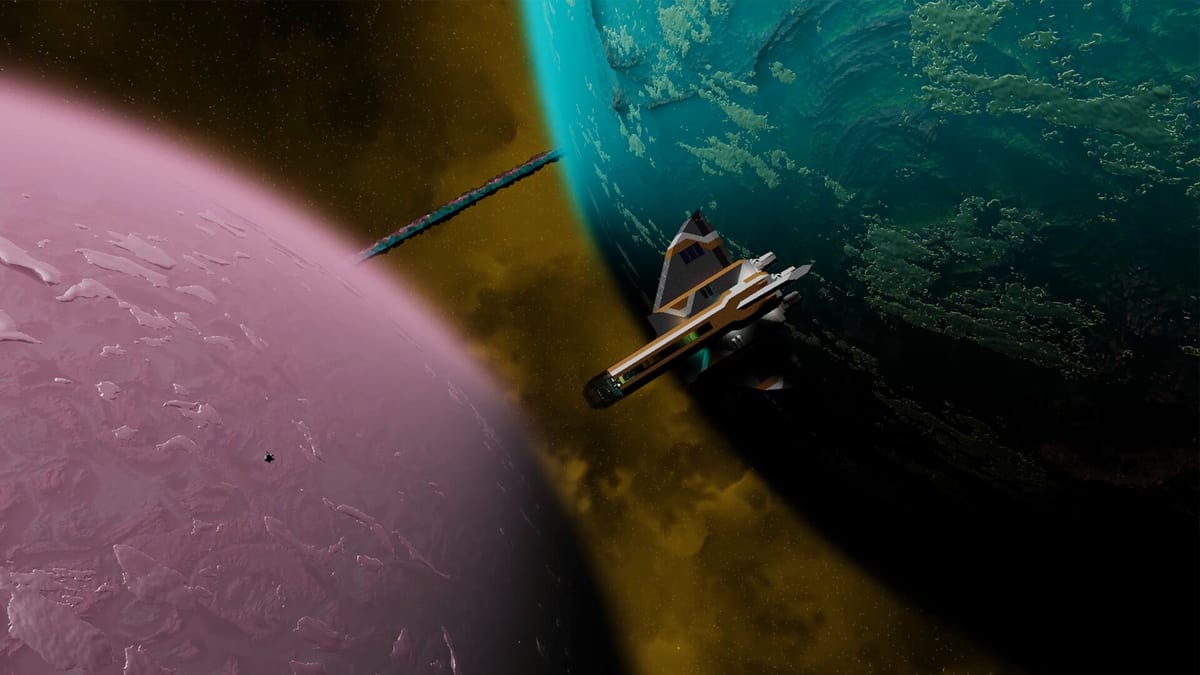
The Moon is an early headline destination — Moonstep base, ice cream deliveries, and the first time your Earth garage build meets low gravity and a surprising twist: the Moon has an atmosphere. That single fact changes which thrusters you fire during final approach. This guide covers transfer planning, in-flight navigation, electric versus atmospheric thrusters, RCS battery management, and a safe landing pad touchdown.
Prerequisites: Build Your First Ship, RCS Thrusters Setup, and working Power and Data Routing. Optional but helpful: Hover Logic for low-altitude stability.
Pre-flight checklist
Before leaving Earth, confirm:
- Main electric thrusters for vacuum ascent and trans-lunar injection
- Atmospheric thrusters (fans/jets rated for atmospheres) for low-altitude Moon flight
- Six RCS thrusters with controller lights green on the pad
- Radar that switches from Earth to Moon target when close
- Cargo secured if running Missions Walkthrough deliveries
- Crew briefed — Co-op Guide if flying multiplayer
Use the Thrust Calculator with Moon gravity in mind; hover thrust requirements drop but low-gravity descents can take forever without forward momentum.
Phase 1: Earth ascent and orbit
Hold R to enter fly mode. Throttle up main electric thrusters vertically until clear of obstacles, then pitch gently forward using RCS to build horizontal speed. Earth tutorials teach sub-orbital hops first; Moon trips need enough velocity to intercept lunar intercept.
Tips:
- Do not cut main thrust to zero while relying only on RCS — a little main thrust keeps attitude control predictable
- Mouse 3 resets stuck joysticks before pitch-over maneuvers
- Monitor power draw; starving the RCS controller mid-pitch is embarrassing and fatal
Phase 2: Trans-lunar coast
Coast toward the Moon with periodic RCS corrections. Watch radar — as you enter lunar influence, displays switch from Earth-relative to Moon-relative targeting. Plan fuel and RCS battery life for the entire coast; depleted RCS on one pitch axis mid-flight means asymmetric rotation for the rest of the trip.
Check RCS controller indicator lights during long burns:
- Green — continue
- Yellow — plan sparing use
- Red / blinking — replace thruster at next garage stop if possible, or adapt approach with main engines only
Phase 3: Lunar approach — atmosphere matters
Unlike hard vacuum lore, Approximately Up’s Moon includes a thin atmosphere at low altitude. Practical impact:
| Altitude / phase | Thruster type | Why |
|---|---|---|
| High approach, orbital adjustments | Electric thrusters + RCS | Efficient in low-atmo thin zones and vacuum-like coast |
| Low altitude, terminal descent | Atmospheric thrusters | Designed to bite air; electric-only can underperform near surface |
| Fine hover over pad | Mix: atmo for lift, RCS for orientation | Keeps nose aligned while sinking slowly |
Stay somewhat low on approach rather than diving from extreme altitude — low gravity means bleeding speed takes time, and atmospheric thrusters work best in their band. Pitch forward during descent so vertical thrust components add forward momentum toward Moonstep instead of hovering in place forever.
Phase 4: Landing at Moonstep
Moonstep is the primary lunar base — ice cream missions, package hubs, and community challenges land here. For a controlled touchdown:
- Align velocity vector with pad using RCS yaw/pitch
- Reduce horizontal speed before vertical sink — low gravity forgives less than you expect
- Switch to atmospheric thrusters for final descent under ~low-atmo threshold (test in demo — if you sink too fast, add atmo thrust earlier)
- Use small dampers or careful throttle cuts instead of hard cutoff
- Touch down at near-zero vertical speed; hold stable for mission timers if required
Some builders flip upside down with RCS, then pulse electric vertical thrusters — creative but risky. Standard pad landings beat stunt entries for cargo missions.
Electric vs atmospheric thrusters — quick reference
Electric thrusters — best for Earth launch, space coast, and high-altitude lunar burns. Connect through power routers with data from throttles or hover logic.
Atmospheric thrusters — best for final Moon approach and skimming near-surface flight. Without them, you may float past Moonstep or take minutes to descend from high arc trajectories.
Ships intended for multi-planet full release (August 2026) should carry both types — see Planets Map for world-specific notes as they ship.
Common Moon failures
| Problem | Fix |
|---|---|
| Overshoot Moon | Start braking earlier; use radar Moon lock sooner |
| Endless slow fall | Pitch forward; use atmo thrusters lower |
| Lost pitch RCS mid-flight | Monitor controller lights; carry spare RCS blocks |
| Cargo mission fail | Keep freezer powered entire trip — dedicated power branch |
| Crash on pad | Add hover logic or practice throttle pulsing on Earth first |
After landing
Complete Moon missions (Missions Walkthrough), restock RCS thrusters, and blueprint the design (B) once unlocked. Compare component choices on the Tier List before rebuilding for longer full-game planet routes.
Related guides
- Getting Started — Earth basics before lunar attempts
- Hover Logic — PD hover for low-altitude hold
- RCS Thrusters Setup — rotation and battery monitoring
- Controls — fly mode and garage keys during repairs at Moonstep
The Moon looks close in the menu; the flight teaches routing, thruster mix, and patience. Respect the atmosphere, watch RCS batteries, and Moonstep becomes a refueling stop instead of a crater factory.
Frequently Asked Questions
Quick answers to the most common questions.
Does the Moon have an atmosphere in Approximately Up?
Yes. The demo Moon has a thin atmosphere at low altitude, so atmospheric thrusters matter for final approach and landing.
Which thrusters should I use for Moon landing?
Use electric thrusters and RCS for high approach and coast. Switch to atmospheric thrusters for low-altitude descent and pad hover.
When does radar switch to the Moon?
When you fly far enough from Earth and enter lunar influence, radar retargets from Earth to Moon references — watch for the handoff during coast.
Why did I lose pitch control mid-flight?
RCS thrusters use single-use batteries. A pitch jet can die on long trips — monitor RCS controller lights and replace depleted thrusters.
Where do I land for missions?
Moonstep is the main lunar base. Ice cream delivery and other package missions target Moonstep pads — see the Missions Walkthrough.